How the Instagram Reels algorithm works: a complete guide
A plain-English breakdown of how the Instagram Reels algorithm works, what it ranks on, and how to use it to drive leads and sales.
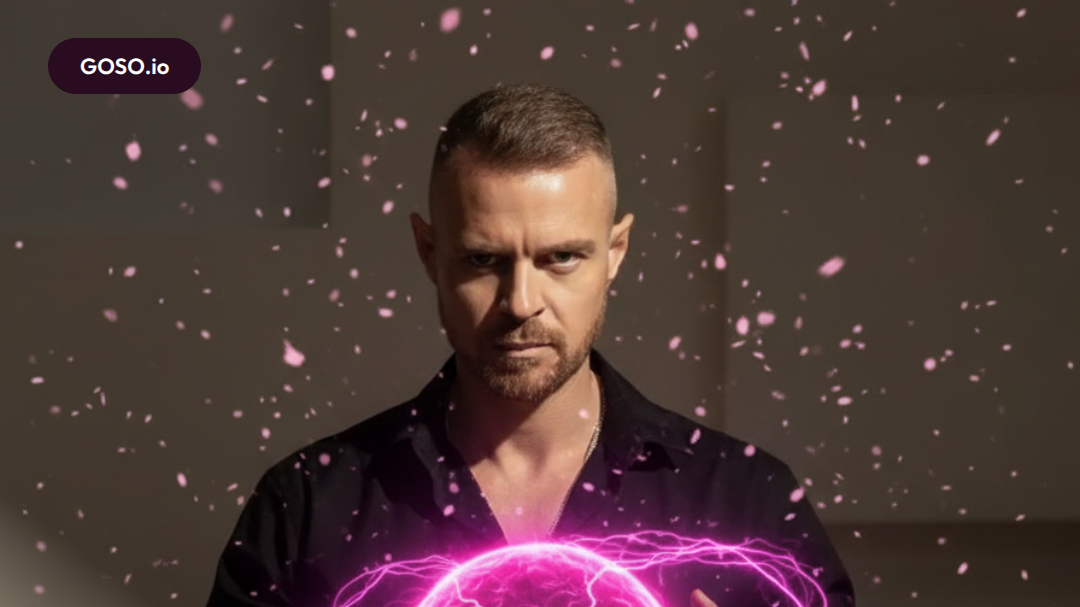
The algorithm rewards content that earns attention, not content that simply exists. Build for the viewer first and the reach follows.Chris Rowan, Founder and CEO of GOSO.io
Get a personalised Instagram growth plan, free
Get my free growth plan 30 seconds. 100% free. No card.The Instagram Reels algorithm decides which videos to show each user based on a set of ranking signals, not on follower count alone. Understanding those signals is the first step to turning Reels into a consistent source of leads and sales. This guide covers every confirmed factor, from watch time and audio choices to creator credibility and what the algorithm actively penalises.
How the Instagram Reels algorithm works
Instagram uses a machine-learning ranking system to decide which Reels to place in each user's feed. It does not show content in chronological order. Instead, it scores every Reel against a set of signals and then predicts how likely a specific viewer is to watch, enjoy and interact with it. Instagram has confirmed this publicly. The system pulls from both accounts a user already follows and accounts they have never seen before. That second group is what gives Reels their outsized reach potential compared with standard Feed posts. Every ranking factor described in this guide feeds into that single predictive score. Because the system is predictive rather than rule-based, small improvements to multiple signals compound over time, which is why creators who understand the ranking logic consistently outperform those who rely on posting frequency alone.
What signals does the Reels algorithm actually rank on
Instagram has grouped its Reels ranking signals into four broad categories. Each category influences how widely a Reel is distributed.
- User activity covers the Reels a viewer has liked, saved, commented on and rewatched. This gives the algorithm a picture of their tastes.
- Content information includes the audio track, the visual subject and any on-screen text. Instagram also uses image recognition to detect topics.
- Creator credibility looks at the account's posting history. It also considers how previous Reels performed across reach and engagement.
- Content quality assesses resolution and audio clarity. It also checks whether the video is original or recycled from another platform.
- Interaction likelihood predicts how probable it is that a viewer will watch to the end, share or comment. All the above signals feed into this prediction.
How user activity shapes which Reels you see
Every action a user takes inside Reels teaches the algorithm about their preferences. When someone watches a Reel to the end, replays it or sends it to a friend, the algorithm notes the topic, the audio and the style of that content. It then looks for similar Reels to serve next. Likes and saves are weighted signals, but replays and shares carry particular strength because they suggest the viewer found the content genuinely useful or entertaining. The algorithm uses a user's activity history to rank the entire pool of available Reels before selecting which ones to show. This is why two users with different viewing histories will see very different Reels feeds even when they follow the same accounts. Creators benefit from this because strong content can reach viewers who have no prior connection to the account.
How Instagram judges the quality and relevance of a Reel
Instagram runs each uploaded Reel through its own content-analysis systems before distribution begins. The platform checks for visual resolution and flags blurry or poorly lit videos. It also analyses the audio track to identify the sound and assess its quality. Topical relevance comes from on-screen text, captions and hashtags. Instagram's image-recognition technology also identifies objects, settings and activities within the video. A Reel shot natively, captioned clearly and set to a recognisable audio track gives the algorithm the clearest possible signal. It can then determine what the content is and who to show it to. Giving the algorithm multiple clear signals at once, through visuals, audio and text, means it does not have to guess, and content that is easy to classify tends to reach a more relevant and engaged audience from the outset.
Read about our AI Content Strategy Agent.
How popularity and engagement affect Reel reach
Early engagement acts as a quality vote that the algorithm uses to decide whether to expand a Reel's distribution. When a Reel receives strong interactions shortly after posting, Instagram interprets that as evidence that the content is worth showing to a larger audience. Several engagement types influence this decision.
- Shares to direct messages or to Stories signal that the viewer found the content valuable enough to pass on to someone else.
- Saves suggest the viewer plans to return to the content, which indicates lasting relevance.
- Comments show active participation rather than passive viewing.
- Replays indicate the content held attention beyond a single viewing, which feeds directly into completion-rate calculations.
Strong early engagement may lead the algorithm to test a Reel with progressively wider audiences, though this is not a guaranteed outcome.
Does rewatching a Reel count and how views are measured
Replays do contribute to the total view count, so a single user watching a Reel multiple times will add to the number shown publicly. However, raw view count is not the primary metric the algorithm uses to judge performance. Watch time and completion rate carry far more weight. Completion rate is the percentage of viewers who watch the entire Reel rather than swiping away partway through. A Reel with a high completion rate tells the algorithm that the content held attention all the way to the end, which is a stronger quality signal than a high view count with poor retention. Creators who track their Reels analytics should pay close attention to average watch time and the drop-off point, because those figures reveal where viewers are losing interest and where the algorithm is likely to limit further distribution.
How creator credibility influences Reel distribution
The algorithm does not treat every account equally when a new Reel is uploaded. Accounts with a consistent posting history and strong past Reels tend to receive a larger initial test audience. Instagram assesses past performance over time, and this shapes the starting distribution of each new Reel. An account that posts rarely or has Reels that were quickly skipped may receive a smaller test audience. Strong past performance can make future distribution easier, while a patchy record may make the algorithm more cautious. Account-level guideline violations also affect distribution. If an account has had content removed or flagged repeatedly, the algorithm may limit how widely it distributes new Reels. This applies even to Reels that would otherwise meet quality standards. Credibility in this sense is cumulative and shaped by the full history of the account.
What the Reels algorithm penalises and avoids recommending
Instagram publicly lists the content types it will not recommend in Reels, even if those Reels do not violate community guidelines outright. Understanding what is penalised helps creators avoid invisible reach restrictions.
- Reels that contain a visible watermark from another platform, such as TikTok, are down-ranked because Instagram treats them as recycled content.
- Low-resolution video is flagged by the quality-assessment system and distributed less widely than crisp, well-lit footage.
- Content that is bordered by large white or black bars, rather than filling the vertical frame, is penalised for poor format compliance.
- Reels that include politically sensitive topics unrelated to the creator's usual niche may be restricted from the Reels recommendation surface.
- Content that has previously received guideline strikes on the account may contribute to reduced distribution for subsequent uploads from that account.
Avoiding these pitfalls is as important as optimising for positive signals.
How to use trending audio to work with the algorithm
Audio is one of the clearest content-information signals the algorithm reads. When a sound or music track is trending on Instagram, the platform already knows that users are engaging with Reels attached to that audio. Choosing a trending track gives a new Reel an immediate contextual association with content that is already performing well. Instagram surfaces Reels by audio, meaning users who tap on a trending sound can browse all Reels using it. That creates a secondary discovery channel beyond the main Reels feed. Original audio can also trend, but it takes longer to build association. Creators who monitor the Reels audio library regularly and act early on rising sounds may find a distribution advantage before a trending track reaches saturation. Licensed music from Instagram's own audio library is generally a safe choice for avoiding rights issues.
How posting consistency and niche focus affect your reach
Consistent posting within a defined niche gives the algorithm a clear picture of the subject and the likely audience, which makes distribution more predictable over time. Irregular posting disrupts that pattern. When an account goes quiet and then returns, the algorithm has to relearn its audience, which may dampen early distribution on the first few posts back. Niche focus works alongside consistency. Accounts that jump between unrelated topics create a mismatch between the audience profile built from one type of content and the audience suited to another. This makes it harder for the algorithm to identify the right viewers for each new Reel. Staying in a clear niche and posting regularly can build a compounding advantage, as each Reel reinforces the same audience profile and may make the next one easier to distribute effectively.
Get your free Instagram sales plan, personalised to your niche and goals.
How to shape and reset your own Reels algorithm
Instagram gives users several tools to influence what appears in their Reels feed. Tapping the three-dot menu on any Reel and selecting not interested tells the algorithm to show less content like that. Doing this repeatedly across a category can shift the feed noticeably over time. Users can also go to account settings and reset their Reels recommendations entirely. This may move the feed towards a more general starting state, though the platform does not guarantee a fully neutral result. Following accounts that post in topics you want to see more of is another direct input, telling the algorithm you have an active interest in that niche. For creators, understanding these controls matters because it explains how audience behaviour shifts over time and why engagement from a relevant audience is worth more than passive views from a broad, disengaged one.
How the Reels algorithm differs from the Feed and Explore algorithms
Instagram applies different ranking logic to each of its main surfaces. The Feed algorithm prioritises content from accounts a user already follows and weights recency more heavily, as Feed is built around what is happening now among people you have chosen to follow. The Reels algorithm is built for discovery and draws heavily from accounts the user does not follow, ranking content primarily on predicted enjoyment and completion rather than on relationship. The Explore algorithm surfaces content from outside a user's network but clusters tightly around topics they have already engaged with, making it interest-driven rather than relationship-driven. Reels offers the widest potential cold reach of the three surfaces. The same piece of content will therefore be scored differently on each surface because each algorithm is optimising for a different viewer intent and a different primary objective.
Is 1000 views on Reels good and how to read your performance
Whether a thousand views is good depends on what happened after those views arrived, not the number itself. A Reel with a high completion rate and a strong share rate that generated a modest view count has likely been distributed to a highly relevant audience and may continue to grow. A Reel with a large view count but minimal shares has probably been tested broadly and found uncompelling, which means further distribution will be restricted. The metrics to prioritise are average watch time, completion rate, saves and shares, because those are the signals the algorithm uses to decide whether to expand distribution. Raw view counts are a by-product of algorithmic decisions already made. Reading performance means looking at the ratio between reach and meaningful engagement, not at any single number in isolation.
Common mistakes that hurt your Reels algorithm performance
Most Reels that underperform do so for a small number of recurring reasons. Identifying which applies to your account is the first step to correcting course.
- Ignoring the first hour after posting is a common error: early engagement is weighted heavily, so responding to comments quickly can strengthen the initial distribution signal.
- Switching niche or topic without building a new audience profile first confuses the algorithm's audience-matching system and suppresses reach.
- Posting a caption with no searchable context leaves the algorithm without text signals to help it classify and distribute the content.
- Reposting content with a visible watermark from another platform signals recycled material and leads to reduced distribution regardless of how strong the content itself may be.
GOSO.io builds AI systems that turn Instagram into a revenue channel: AI sales agents, social proof and lead generation.
Get a personalised Instagram growth plan, free
Get my free growth plan 30 seconds. 100% free. No card.Frequently asked questions
What is the 5-3-1 rule for Instagram?
The 5-3-1 rule is a content rhythm where you post five educational pieces, three engagement pieces and one promotional piece in a cycle. It is a practitioner framework, not an official Instagram guideline.
Is 1,000 views on reels good?
Strong saves and shares matter far more than raw view numbers, and a poor completion rate suggests the algorithm tested the Reel and found it unconvincing.
Does rewatching an Instagram reel count as a view?
Yes, replays add to the total view count on a Reel. However, the algorithm weights completion rate and watch time far more than raw view numbers, so replays matter most because they signal genuine interest.
Does Instagram suggest people who look at your profile?
Instagram does not use profile viewers as a direct basis for account suggestions. Suggestions are based on mutual connections, similar interests and activity patterns rather than on who has viewed your profile.
How long should a Reel be for the best reach?
Keep your Reel only as long as your content genuinely needs. Completion rate is a key signal, so a shorter Reel that viewers finish entirely outperforms a longer one with high drop-off. Instagram has not confirmed a single ideal length.
Can hashtags still help Reels reach new audiences?
Hashtags are one of several content-information signals the algorithm reads. They help classify your content by topic but are less influential than audio choice, completion rate and share behaviour when it comes to broad discovery reach.
Does posting at a specific time of day affect Reel performance?
Posting when your existing audience is most active can strengthen early engagement, which in turn signals quality to the algorithm. Check your account insights for peak activity windows and test posting within those periods.